Written by Zoe Siegel & Jonathan DeLong
Forty people. Six weeks. One powerful vision for what work — and healing — can look like.
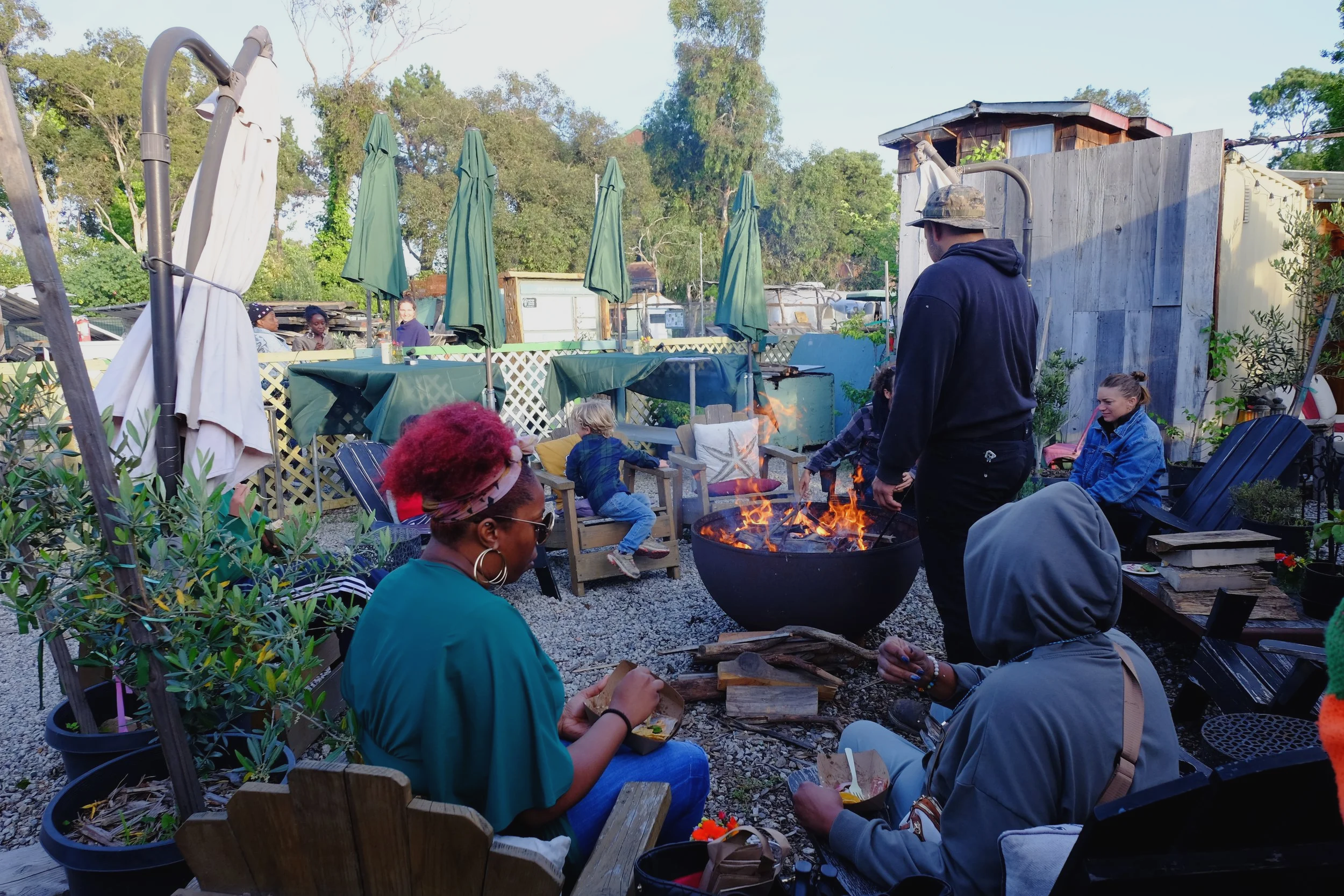
On a Wednesday evening in mid-April, something quietly historic happened in the Bay Area. Twenty participants gathered to celebrate the completion of the first cohort of the Regenerative Jobs Training Program — a partnership between Greenbelt Alliance and the REAP Climate Center — over a shared meal, music, and the kind of warmth that only comes from people who have built something together.
It was a graduation. But it was also a beginning.
From Soil to Livelihood
The Regenerative Jobs Training Program was born from two simple but urgent truths: our region needs people who know how to heal the land, and too many people have been locked out of the pathways that lead to stable, meaningful work.
Over six weeks, participants received hands-on training in compost and biochar — foundational practices in regenerative land stewardship — alongside professional development and job coaching. At the end, they walked away with a $1,150 stipend, an industry-recognized certificate, and something harder to quantify but just as real: the knowledge that they have a place in the emerging green economy.
This first cohort is one of two that have launched this spring, with the second cohort's celebration set for May 13th. Together, they represent 40 people stepping into careers that didn't exist at scale even a decade ago.

While the group works on the compost pile, fennel is set aside to feed REAP’s sheep!
Who This Program Is For — and Why It Matters
The Regenerative Jobs Training Program was intentionally designed for communities that have historically been excluded from both economic and environmental opportunity. Application data shows that a strong majority of participants self-identify as coming from low-income backgrounds, as BIPOC individuals, as veterans, or those re-entering the workforce.
That's not a footnote. It's the point.
For too long, the green economy has promised a better future while leaving behind the very communities most impacted by climate change and economic precarity. This program is a direct challenge to that pattern — proof that workforce development and environmental justice don't have to be separate conversations.
Funded through the California Jobs First Initiative and supported by All Home, the program puts real resources behind that commitment: a paid stipend, real skills, and real job prospects.
An Evening Worth Celebrating
The graduation ceremony — hosted as a community potluck — set the right tone from the start. People trickled in early, sharing food and conversation before the formal program began. Jonathan DeLong, Executive Director of the REAP Climate Center, offered a welcome on behalf of Greenbelt Alliance and All Home. Then came the moment everyone had worked toward: Renata Browne, Regenerative Jobs Training Program Instructor, called each participant forward one by one to receive their certificate. After the ceremony, music played, people lingered, and conversations stretched into the evening. The kind of night that's hard to leave.
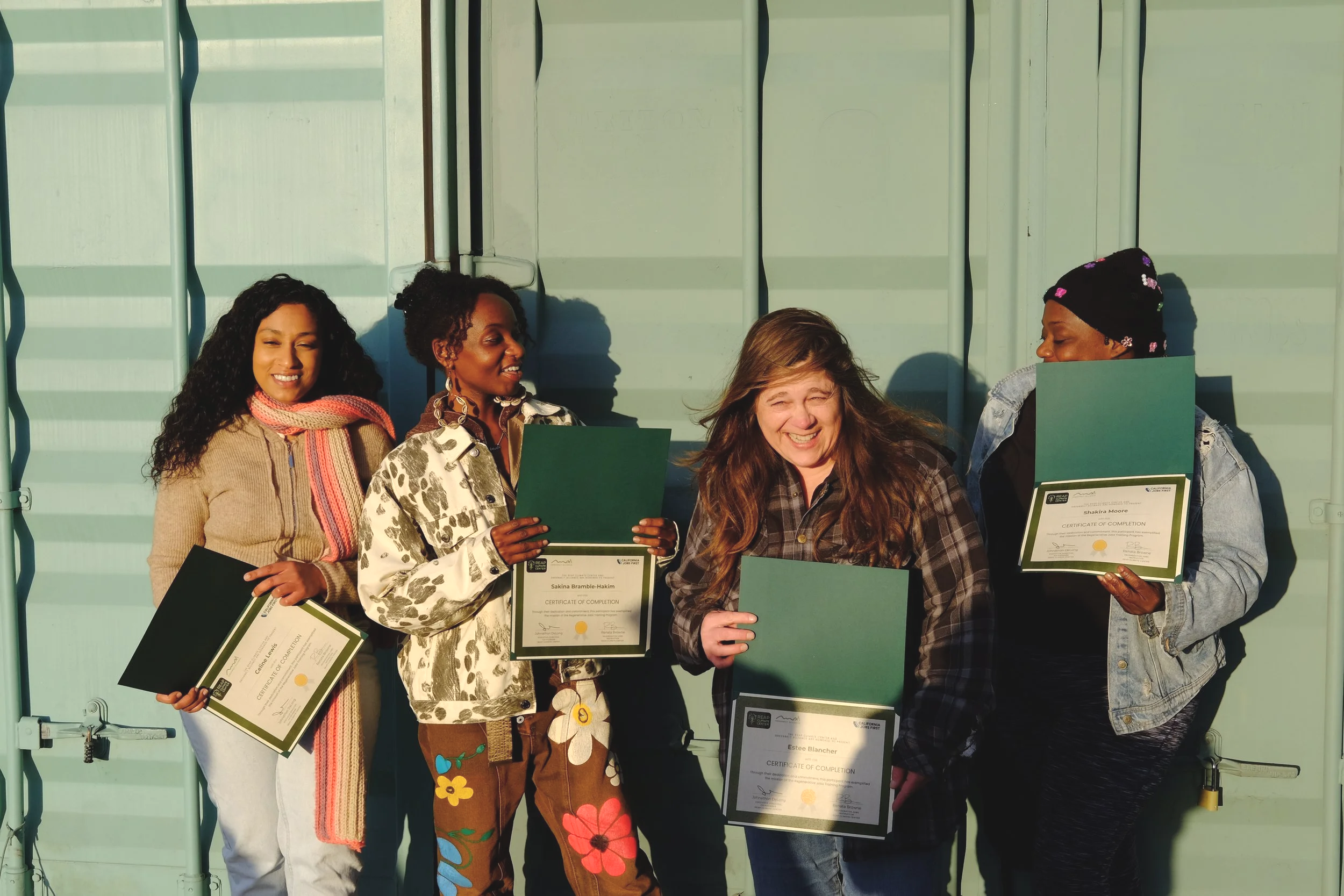
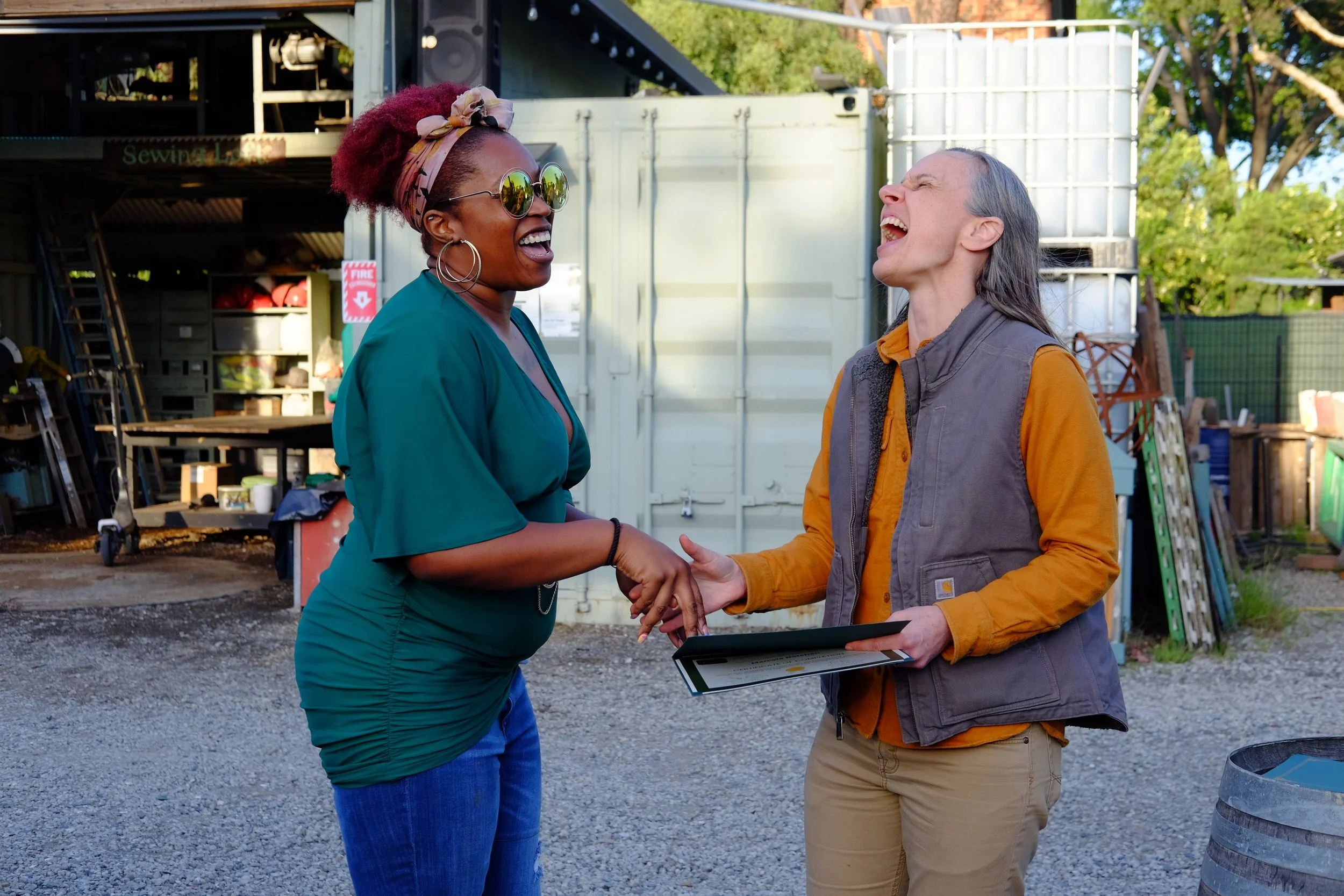
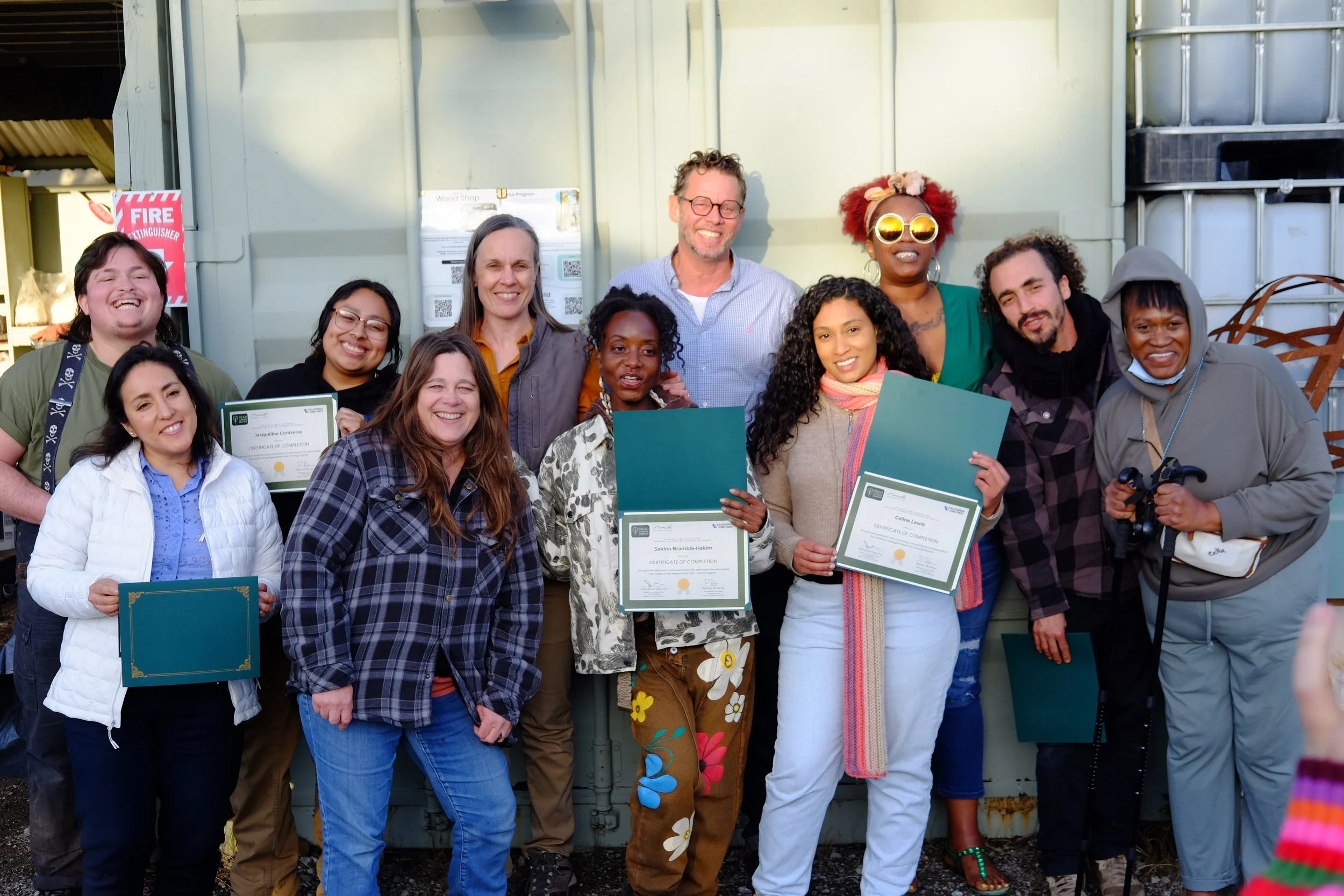
Some members of Cohort 1 gather for a group photo with instructor Renata Browne and REAP Executive Director Jonathan DeLong.
Photos by Cailin Notch
The Bigger Picture
The demand for regenerative land stewardship jobs is growing fast. As more cities, counties, and businesses commit to climate resilience, they need workers with the skills to put those commitments into practice. Compost systems, biochar application, habitat restoration — these aren't abstract concepts. They are jobs. Real, hands-on, community-rooted jobs.
The Regenerative Jobs Training Program is designed to be a replicable model. This first cohort is not just a milestone for the 20 people who completed it — it's a proof of concept for what's possible when nonprofit organizations, workforce development systems, and environmental partners align around a shared vision.
The program would not have been possible without the partnership between Greenbelt Alliance and the REAP Climate Center. Greenbelt Alliance provides the coordination and administrative backbone, and the REAP Climate Center brings deep expertise in regenerative practices and training curriculum. And the participants bring exactly what every healthy ecosystem needs: diverse knowledge, lived experience, and the drive to build something that lasts.
What Comes Next
The second cohort graduates on May 13th — another evening of food, community, and certificates. If the first is any indication, it will be a night to remember.
But beyond that celebration lies the real work: connecting graduates to employers, scaling the model to new regions, and continuing to prove that a regenerative economy is one that invests in people as much as it invests in land.
The soil is ready. The workers are ready. The only question is how quickly the rest of us can catch up.

Photo by Cailin Notch
To learn more about the data behind the Regenerative Jobs Program, you can check out this blog post!
You can also listen here as Alameda Connections host Scott Piehler talks with Jonathan about the concept of Nature as Infrastructure, and the work being done by REAP, serving the Bay Area as a jobs training facility to prepare people for careers in green industries.