
By Jonathan DeLong, Executive Director
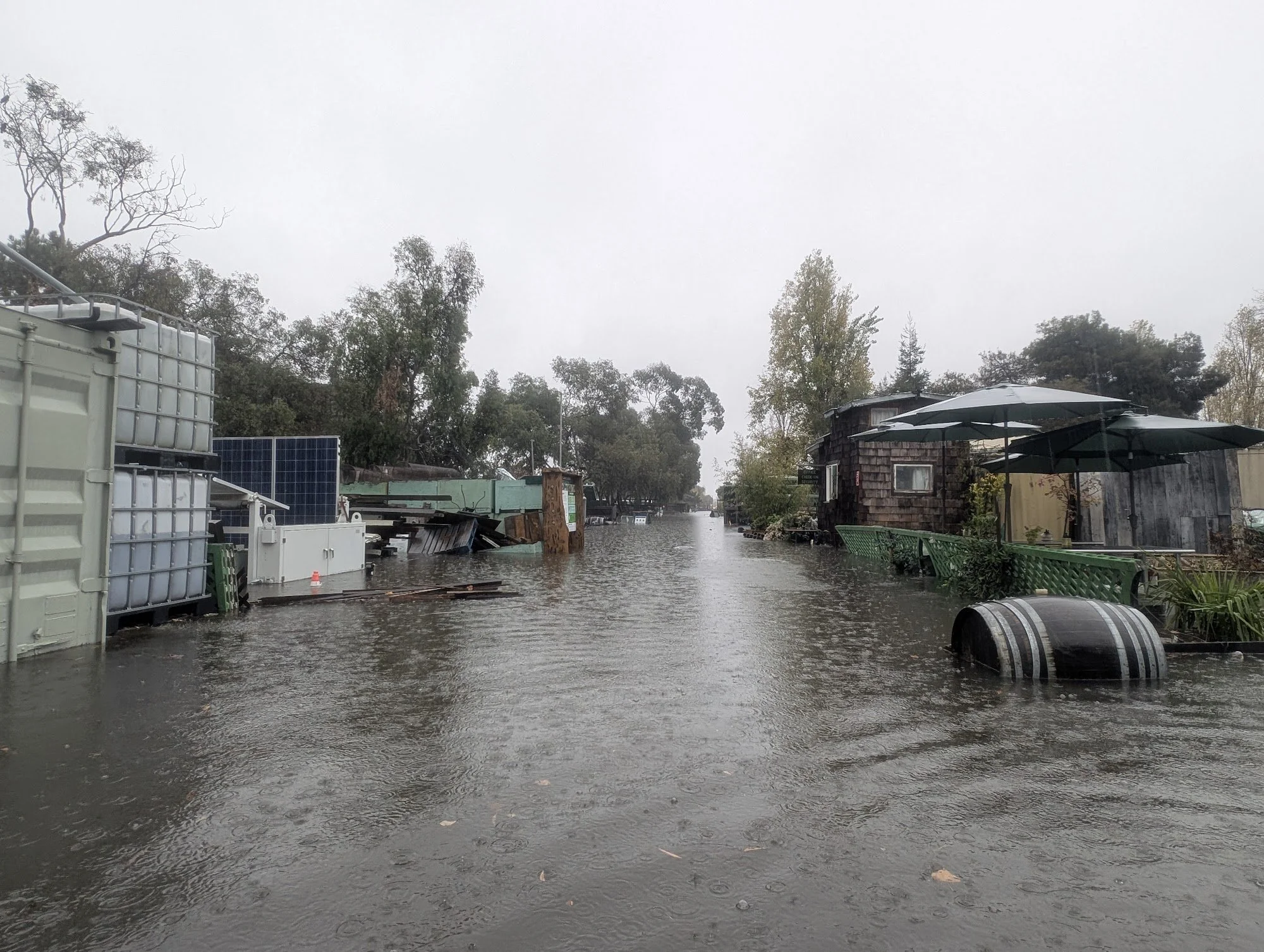
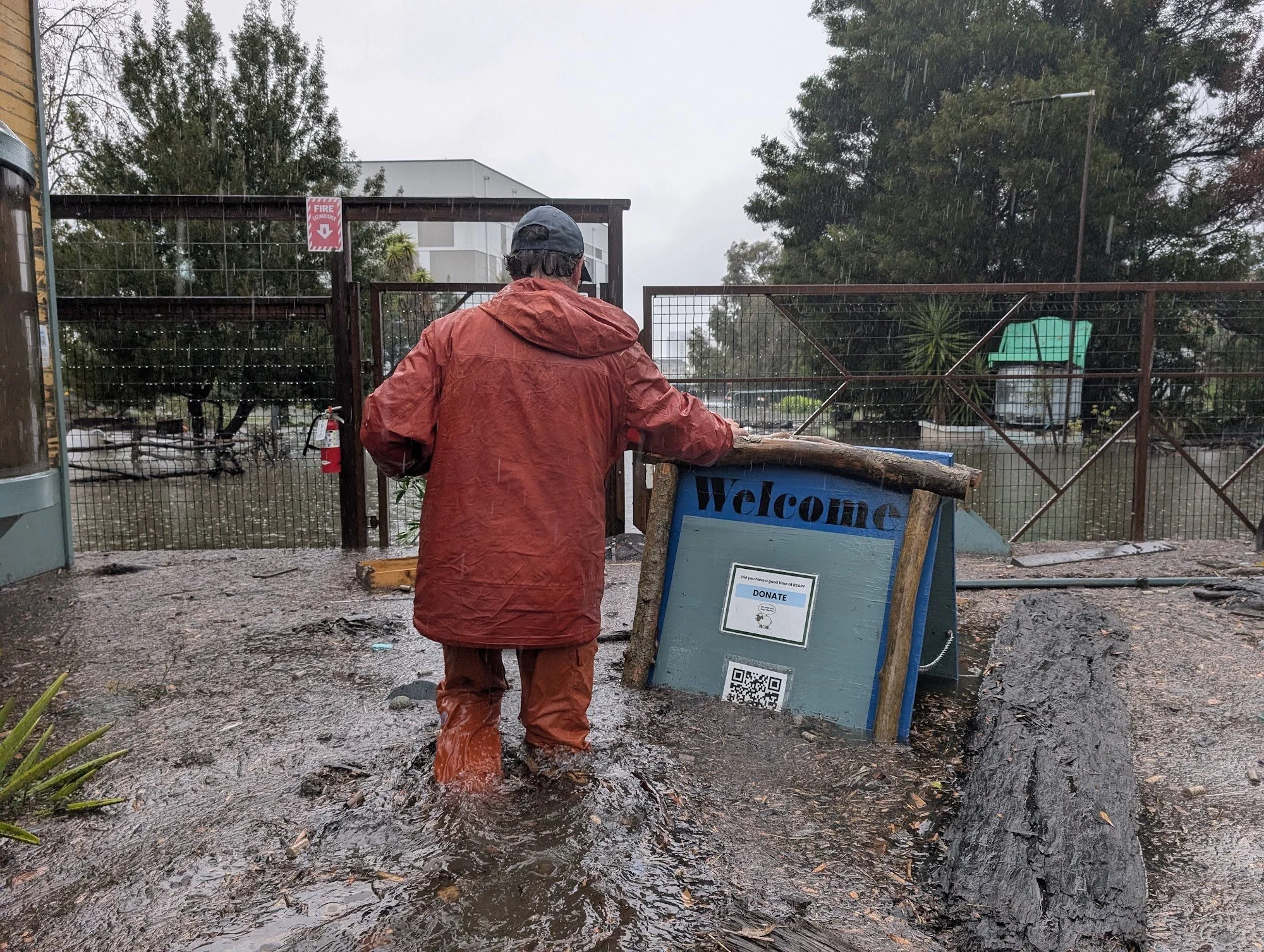
On Wednesday, November 18, more than two million gallons of water came through the REAP Climate Center campus. I am asking for your help to put it back together and to be ready for the next one: please give, share this post, or join us on a Sunday to help rebuild.
What happened to us
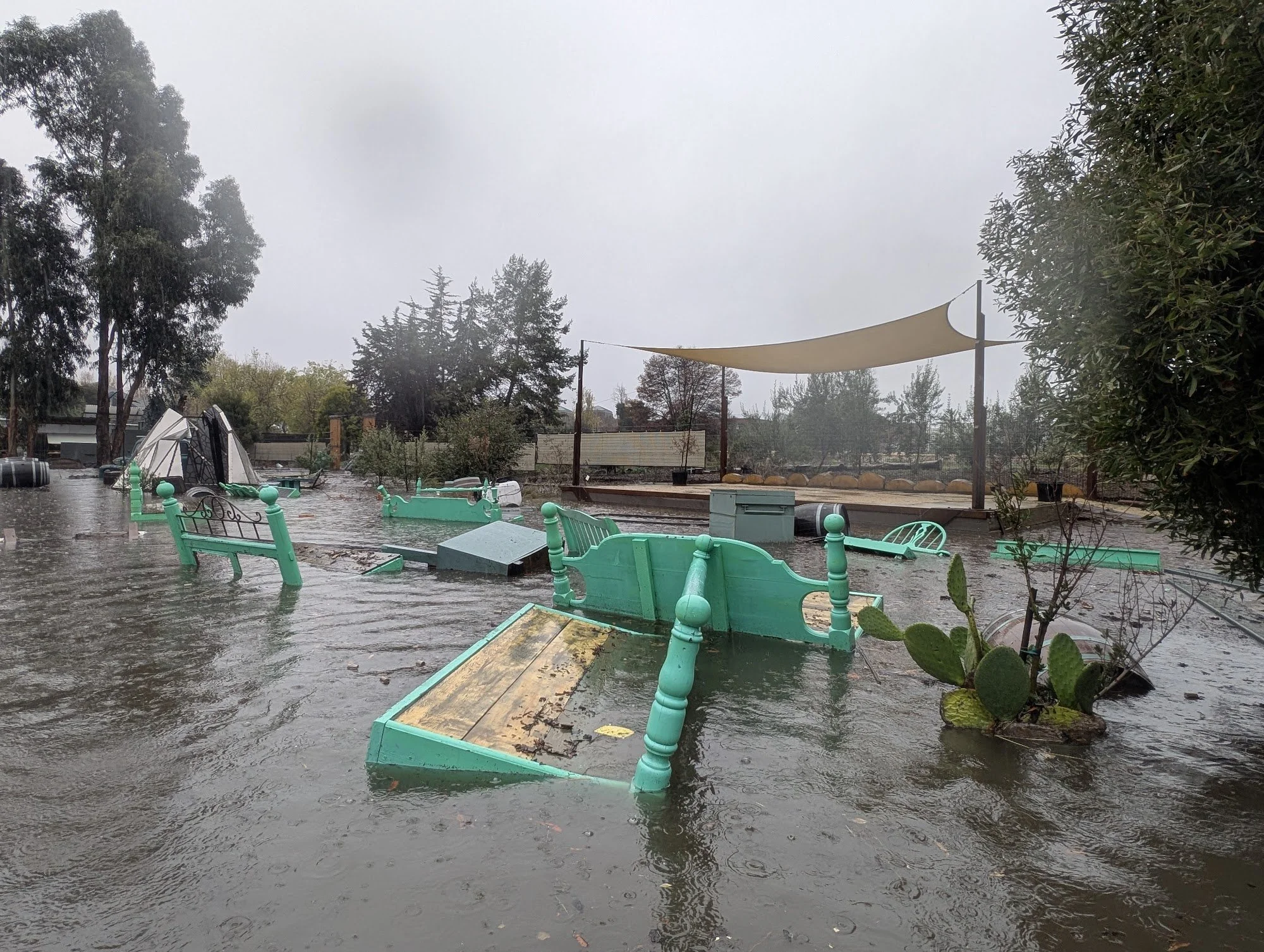
Some of that water passed through. Some of it stayed. After six years of building our campus and curriculum, we watched the water cover it. Benches and barrels floated across the grounds. Water stood around our workshop, our shipping containers and our buildings. This is devastating. Our team has been working from the first drop until now. We are exhausted, and We are hurting. You can also see all of the photos.
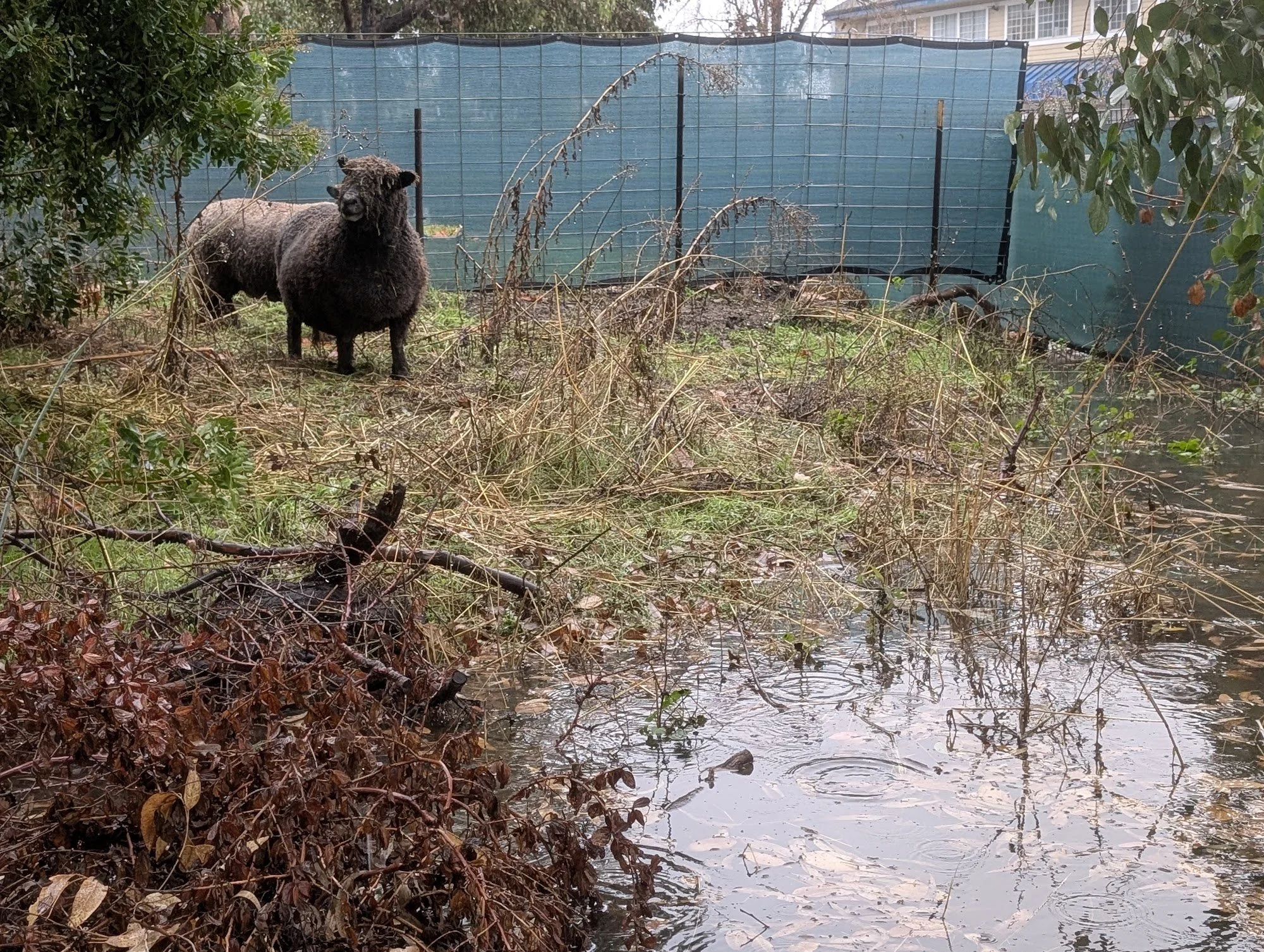
The animals came through with a lot of help. The sheep were moved to safety. The chickens were given high surfaces. The beehives were already on high ground, though the water reached the feet of their stands. Sadly, one of our two cats is missing. She first found us as a scrappy feral cat, and we are hoping that resilience is guiding her now.
Why it happened: three things at once
The bay was already high. This is an El Niño year, and El Niño sends Kelvin waves up our coast. These are large, slow-moving ocean waves that raise sea level for a while. NOAA puts their lift at 6 to 12 inches or more, lasting weeks. Four Southern California gauges, San Diego's among them, logged their highest water ever in late October (NOAA's explanation).
A storm stacked on top. The tide itself was ordinary that morning. NOAA's table for the Alameda gauge called for a high of about 5.6 feet. The gauge measured about 7.25 feet, in early data. That is roughly 20 inches of water the tide table did not show. A 1918 rainfall record for the date fell in downtown San Francisco, where 2.28 inches had come down by 3 p.m.
The drains could not keep up. Two storm drain systems serve our area and normally back each other up. Both failed at the same time, which we had not seen before. The Alameda Post reported flooded streets around the city as drains fell behind.
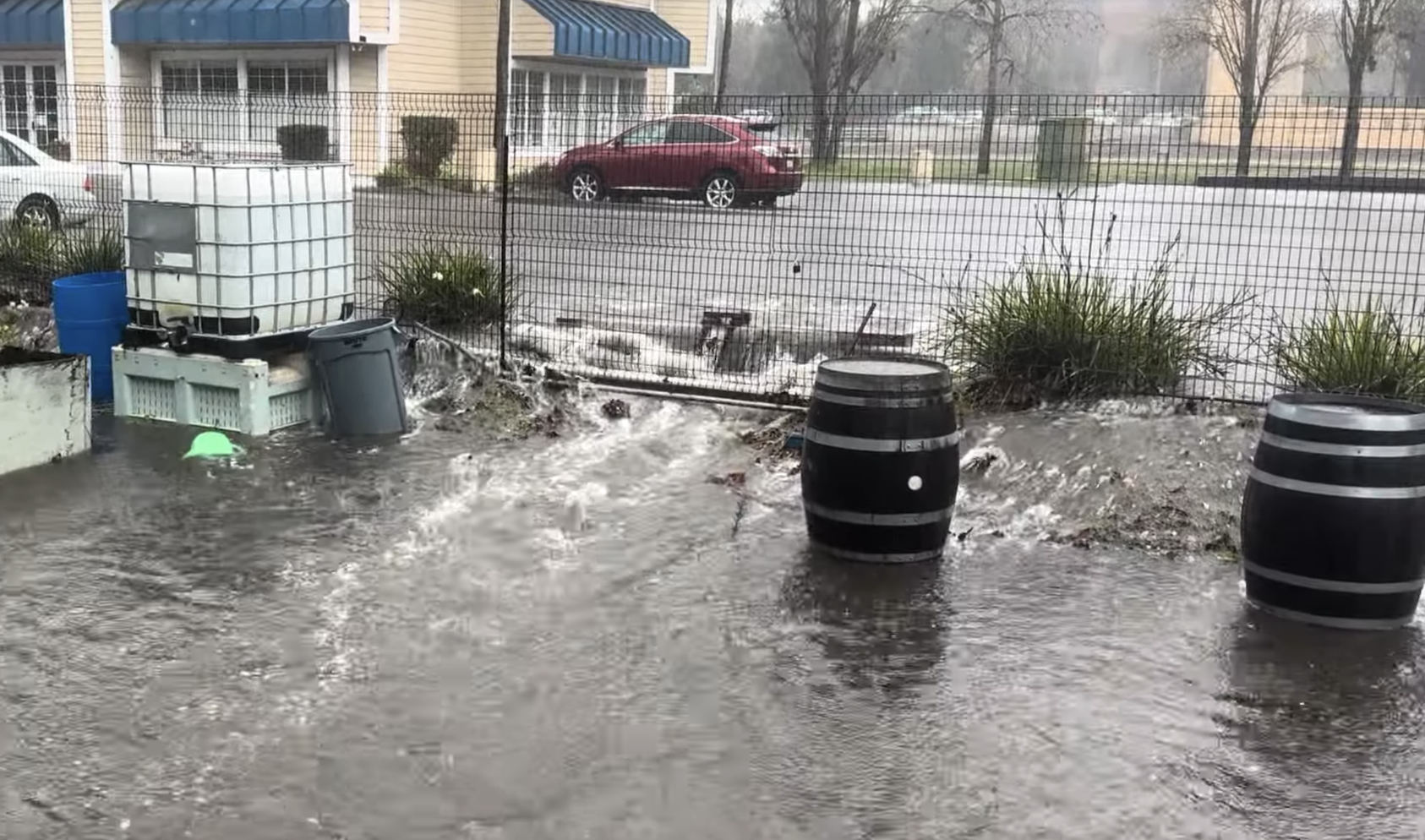
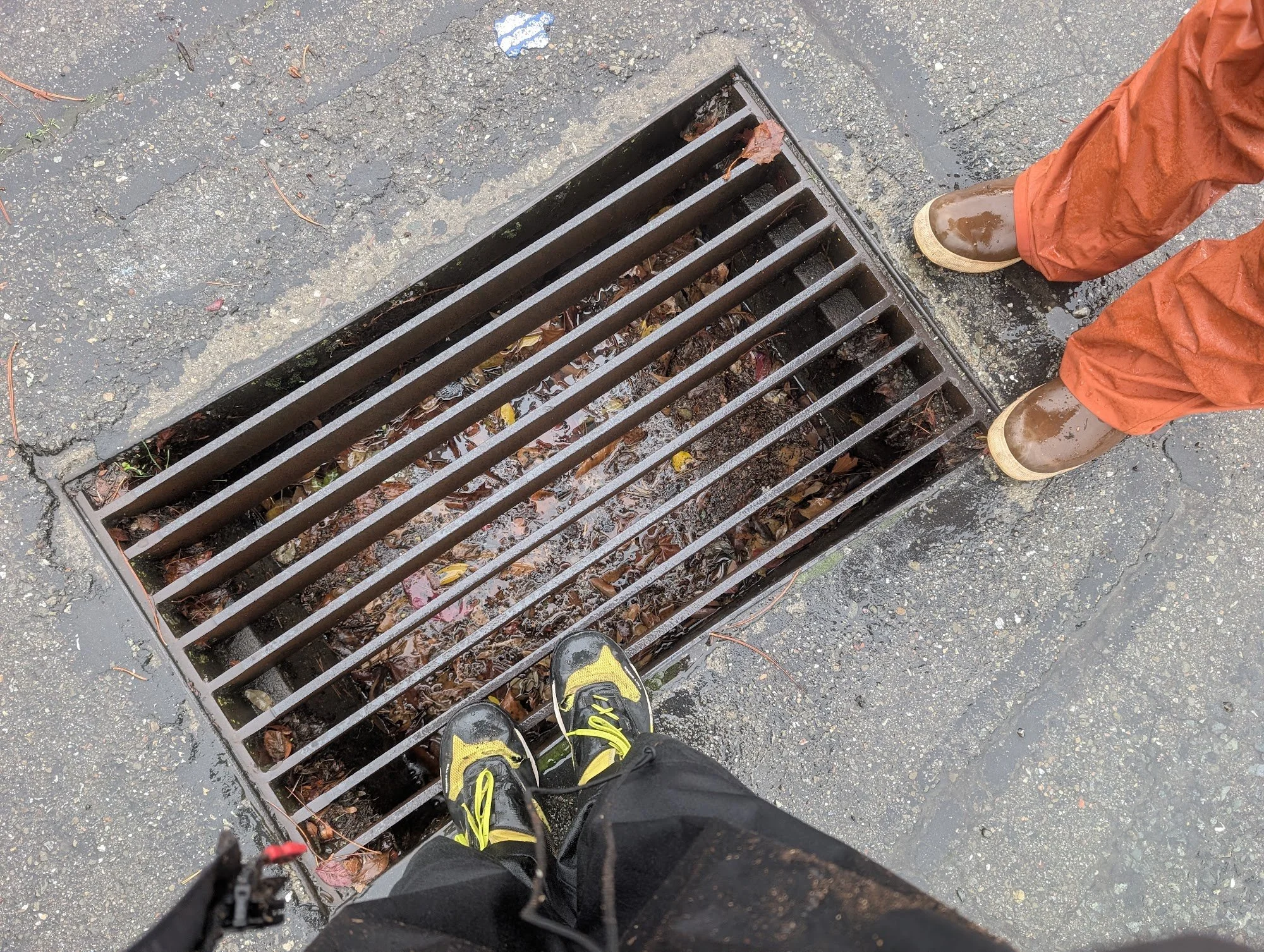
Planners call this compound flooding: high bay water, heavy rain and stormwater meeting in one place. NPR's October coverage carried a warning from NASA's Josh Willis about this exact lineup: El Niño, a high tide and storm surge landing together (NPR).
The long-term plan, arriving early
I serve as a working group member of the Oakland Alameda Adaptation Committee (OAAC), a multi-jurisdictional shoreline coalition coordinating sea level rise adaptation, flood protection, water quality, habitat restoration, and community resilience across Oakland and Alameda. A couple of months ago, 75 people gathered at REAP for a sea level rise adaptation mixer.
Two feet of sea level rise over the coming decades is the planning target for OAAC's near-term projects. On November 18, the bay stood about 1.7 feet above its predicted tide for a morning. What happened fits the maps and plans we work on for the long term. I did not expect it this soon. It is a reminder that as the climate shifts, our plans can miss other factors and tipping points, like a Kelvin wave arriving on top of everything else.
This is a complex system on a global scale. On a smaller scale, a city's public works systems are complex too. It is amazing that it works at all.
Thank you, Public Works
I'd be remiss if I didn't take extra time to give special thanks and acknowledgement to the folks of Public Works, who quite literally keep our lives running. I have been so touched by their dedication. When I think about how exhausted our team is from this, I think about the scale upon which these amazing professionals manage to push through every day.
Neighbors and public officials have answered with an outcry of support too. We feel loved and supported. We still desperately need help.
What comes next
The irony is not lost on me. Our mission is to teach about climate change mitigation: systems, hydrology, sea level rise, and the community it takes to get through events like this. Our Hydrology House was one of the next labs in the queue to be built, to bring communities and experts together for this exact reason. It appears the front line we are working to hold has arrived at our doorstep.
Over the next 20 years, our island will face some very tough decisions, and we will need a shared understanding of events like this to make them well. That is our mission, and the mission is now upon us. This flood is a validation of the work and a call to action. Every lesson from this week will go into how we rebuild and into the curriculum we teach.
This came in the middle of our Winter Campaign, where we promised you many messages. We have to shift our focus now. There is no ignoring a flood.
NOAA expects above-normal high tides again from November 22 to 27. You can watch live Alameda water levels and National Weather Service alerts along with us.
How you can help
Give, big or small. Donate on GoFundMe
Spread the word. Share this post with a neighbor.
Come by on a Sunday. Volunteer days run 10am to 3pm at 2133 Tynan Avenue in Alameda. Help us put things back together now, and join the community in the months and years to come.
We are exhausted but not deterred. Build a thing. Fix a thing. Grow a thing. This month we are fixing. With your help, we will keep building and growing.
Jonathan DeLong
Executive Director, REAP Climate Center